
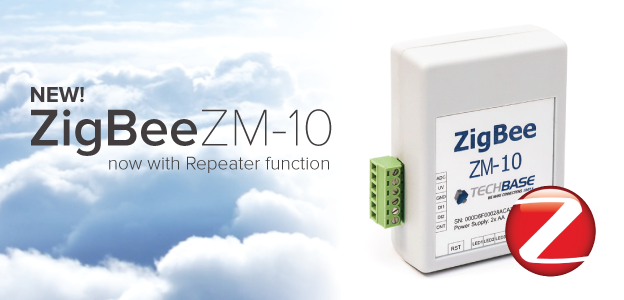
Latest version of ZigBee modules – now with Repeater feature.
ZigBee IoT sensors

We are racing towards a world that is smart and connected. With all these internet of things embedded devices are becoming more integrated into our every day lives. As we move into a new era where all the devices around us are going to inter connected and feeding data into cloud storage systems, the whole transition can be a bit scary and that why our team at Techbase has put together these articles to inform our future clients on how internet of things embedded devices will transform the way we live.
One of the most pressing questions on peoples minds is how do I still protect my privacy in this age of connectivity.
CNET reported an instance where “routers, multimedia centres, televisions and at least one refrigerator” participated in a spam botnet blast that sent 750,000 emails to unsuspecting victims.
While consumer Internet of Things embedded devices are subject to hijacking, the real concern is in the enterprise.
Many hospitals and doctor’s offices are still running Windows XP, even though that OS is long out of date and subject to serious security flaws. Many industrial controllers are also still running XP, making them potential targets.
But at least those were machines known to be based on PC software. As we look to the future, how many sensors, switches, actuators, gauges, and couplings will be IP-based, and therefore will be accessible to the Internet?
https://youtu.be/tWR5MSx6JVA
We know, beyond a shadow of doubt, that given the opportunity, bad guys will take advantage of weaknesses in our security. We also know, almost without doubt, that consumers and enterprises will probably not go the extra mile to protect their Internet of things embedded devices, either because that would be complicated, tiresome, or too costly.
Our best answer is insisting our vendors build security into their systems as a core design requirement. There is just no reason, for example, that home wireless alarm systems transmit data in unencrypted form. There is no excuse for poorly designed systems that don’t place encryption and security at the top of the priority list.
If you would like to know more about how Techbase can help your firms with all its internet of things embedded device needs. Please do not hesitate to contact one of our consultants today!
m2m solutions|IOT devices|Internet of things embedded Devices|IOT Solutions|Smart Grid Solutions|m2m devices|Rapid deployment solutions|Internet of things solutions
The Internet of Things (IoT) offers tantalising and practical opportunities for a better world. IoT Embedded Devices will continue transforming mobile social media, digital marketing, political impacts, online news, Internet business models, storytelling formats, startup opportunities, brand positioning and predictive analytics.

1. IoT embedded devices starts in the home:
Every citizen needs to know the pattern of power and water consumption in their house on a regular basis. IoT embedded devices help them not just monitor these patterns but also save money by taking corrective actions, and gives them a larger sense of achievement in conserving energy and resources.
2. IoT embedded devices on the move:
Cars have always been sources of important data on vehicle status and navigation patterns, but for the first time it is possible to download and analyse that data in a convenient manner, thanks to smartphones. Via IoT embedded devices, car analytics and geo-tagged databases, it is possible to detect when components like batteries will fail and where the nearest replacement is possible, thus providing car owners with better decision-making power and security.
3. IoT embedded devices in industry:
While much hype understandably focuses on consumer IoT embedded device scenarios like wearable health devices or even fridges ordering vegetables when the shelves are empty, the real visible action is industrial IoT embedded devices. Sensors on oil rigs can help better utilisation of drilling equipment and detect leakages and spills; power tracking and optimisation on outdoor ads and remote hoardings ensures that lighting is reliable and consistent.
4. Understanding IoT embedded devices:
One reason for the relatively slowly adoption of many IoT embedded device-based tools and services is that it is hard for consumers to understand how the solutions work. Visualisation will play an important role in helping consumers understand what IoT streams of data mean and how to react.
5. Monetising IoT embedded devices:
Many startups are flocking to the IoT embedded devices bandwagon, but to monetise these tools they need to be clear on sources of revenue streams. For example, in the case of automotive IoT embedded devices, who is paying for the service: the car owner, car manufacturer, components manufacturer, systems integrator or fleet owner?
6. Delivering IoT embedded devices:
Customers don’t necessarily want to pay for something called an IOT embedded device solution, so it is important for startups to devise service-level agreements (SLAs) for customers to better understand how IoT embedded devices actually delivers value, eg. how much it costs for solutions for better energy usage and early identification of defects. In the case of the India market, a good example is solutions for monitoring and operating diesel generators in a cost-effective manner during the frequent power cuts.
7. Have a larger vision
The onus is on us to pass on the world to the next generation in a better shape than it is now. Solutions powered by IoT embedded devices can help create a more sustainable planet by reducing the carbon footprint. This can be achieved by smart management of road traffic and optimised control engineering for solar and wind energy.
If you would like to know more about how our IoT embedded devices can be of value to your organisation. Please do not hesitate to contact us today!
m2m solutions|IoT embedded devices|Internet of things Devices|IOT Solutions|Smart Grid Solutions|m2m devices|Rapid deployment solutions|Internet of things solutions

As the world becomes more inter connected, we will need smaller computers.It might seem a little silly to compare the modern computer to the whole of the universe, but if we’re to build an Internet of Things embedded devices (IoT) then we need to make our computers smaller – much smaller than a smartphone or a tablet.
Small computers these days are everywhere, we have all heard of the raspberry Pi mini computer that looks just like a USB thumb drive.

One of the latest micro computers is Intel’s SD card-sized Edison, a tiny board built around a two core Quark system-on-a-chip, with memory, radio and a full set of SDIO ports. Quark is Intel’s processor for the IoT, a sub-Atom (hence the name!) 32-bit device devoid of SSE and other extensions, while still supporting as many interfaces as possible. It’s also very low power, drawing less than a watt. That makes it ideal for sensor-driven devices – especially in control systems, as it’s designed for real time operating systems (so don’t expect to run Windows on Quark).
Edison’s SD card form factor makes a lot of sense; it’s small, it’s familiar, and it supports a well-documented set of interfaces. Intel is also giving Edison a SIM card pinout, making it easy to connect to wireless devices – devices that are likely to be the heart of any future sensor or control network.

One factor that links Internet of Things embedded devices is radio technology: Bluetooth Low Energy. It’s already at the heart of many of the medical sensors we’re using, but there’s more to Bluetooth LE than connectivity as it also supports operation as a low power radio beacon. That’s a mode that the folk at Phone Halo are taking advantage of in their latest device tracker. As soon as a tracker loses contact with a host device, it starts to broadcast its ID over a Bluetooth LE beacon. Other devices running the Phone Halo software will spot those beacons, and send the device location back to the Phone Halo network; offering a distributed alert service for stolen or lost devices.
We’re finally seeing the birth of a ubiquitous computing world, with the first generation of processors, sensing devices and radios on show at CES. That’s not the end point, of course. Things are going to continue to get smaller, and more highly connected.

Quark and Edison are still too big for that future, but they’re a step on the road. The ubiquitous computing pioneer Marc Weiser saw things in terms of three classes of device: tabs, pads and walls. Tabs would be the building blocks of a sensor and actuator network, with pads providing an individual user interface, and walls a collaborative computing space. We’re at a point where our familiar computing environments become the pads and the walls of our ubiquitous computing world, and where technologies like ARM’s devices and Intel’s Edison are the building blocks of our personal networks of Tabs.
If you enjoyed this article and would like to know more about how Techbase is revolutionizing the development of internet of things embedded devices. Please do not hesitate to contact one of our consultants today!
m2m solutions|IoT embedded devices|Internet of things embedded Devices|Industrial IoT Solutions|Smart Grid Solutions|m2m devices|Rapid deployment solutions|Internet of things solutions
The “Internet of things devices” (IoT Embedded Devices) is becoming an increasingly growing topic of conversation both in the workplace and outside of it. It’s a concept that not only has the potential to impact how we live but also how we work. But what exactly is the “Internet of things devices” and what impact is it going to have on you if any? There are a lot of complexities around the “Internet of things devices” but our team at Techbase want to stick to the basics.
Broadband Internet is become more widely available, the cost of connecting is decreasing, more devices are being created with wifi capabilities and censors built into them, technology costs are going down, and smart phone penetration is sky-rocketing. All of these things are creating a “perfect storm” for IoT embedded devices.
So what is the Internet of things?
Simply put this is the concept of basically connecting any device with an on and off switch to the Internet (and/or to each other). This includes everything from cell phones, coffee makers, washing machines, headphones, lamps, wearable devices and almost anything else you can think of. This also applies to components of machines, for example a jet engine of an airplane or the drill of an oil rig. As I mentioned, if it has an on and off switch then chances are it can be a part of the IoT. The analyst firm Gartner says that by 2020 there will be over 26 billion connected devices…that’s a lot of connections (some even estimate this number to be much higher, over 100 billion). The IoT is a giant network of connected “things” (which also includes people). The relationship will be between people-people, people-things, and things-things.
How does this impact you?
The new rule for the future is going to be, “anything that can be connected, will be connected.” But why on earth would you want so many connected devices talking to each other? There are many examples for what this might look like or what the potential value might be. Say for example you are on your way to a meeting, your car could have access to your calendar and already know the best route to take, if the traffic is heavy your car might send a text to the other party notifying them that you will be late. What if your alarm clock wakes up you at 6 am and then notifies your coffee maker to start brewing coffee for you? What if your office equipment knew when it was running low on supplies and automatically re-ordered more? What if the wearable device you used in the workplace could tell you when and where you were most active and productive and shared that information with other devices that you used while working?
On a broader scale the IoT can be applied to things like transportation networks “smart cities” which can help us reduce waste and improve efficiency for things such as energy use; this helping us understand and improve how we work and live. Take a look at the visual below to see what something like that can look like.
The reality is that IoT devices allows for virtually endless opportunities and connections to take place, many of which we can’t even think of or fully understand the impact of today. It’s not hard to see how and why IoT embedded devices are such a hot topic today, it certainly opens the door to a lot of opportunities but also to many challenges. Security is big issues that is oftentimes brought up. With billions of devices being connect together what can people to do make sure that their information stays secure? Will someone be able to hack into your toaster and thereby get access to your entire network? IoT embedded devices also open up companies all over the world to more security threats. Then we have the issue of privacy and data sharing. This is a hot button topic even today so one can only imagine how the conversation and concerns will escalate when we are talking about many billions of devices being connected. Another issue that many companies specifically are going to be faced with is around the massive amounts data that all of these devices are going to produce. Companies need to figure out a way to store, track, analyze, and make sense of the vast amounts of data that will be generated.
So what now?
Conversations about IoT embedded devices are (and have been for several years) taking place all over the world as we seek to understand how this will impact our lives. We are also trying to understand what the many opportunities and challenges are going to be as more and more devices start to join the IoT embedded devices revolution. For now the best thing that we can do is educate ourselves about what IoT embedded devices are and the potential impacts that can be seen on how we work and live.
If you would like to know more about how Techbase can help your firm with all its IoT embedded device needs, please do not hesitate to contact one of our consultants today!
TECHBASE Industrial Rapid Deployment Solutions – Making A Difference
m2m solutions|IoT devices|Internet of things Devices|IoT Solutions|Smart Grid Solutions|m2m devices|Rapid deployment solutions|Internet of things solutions